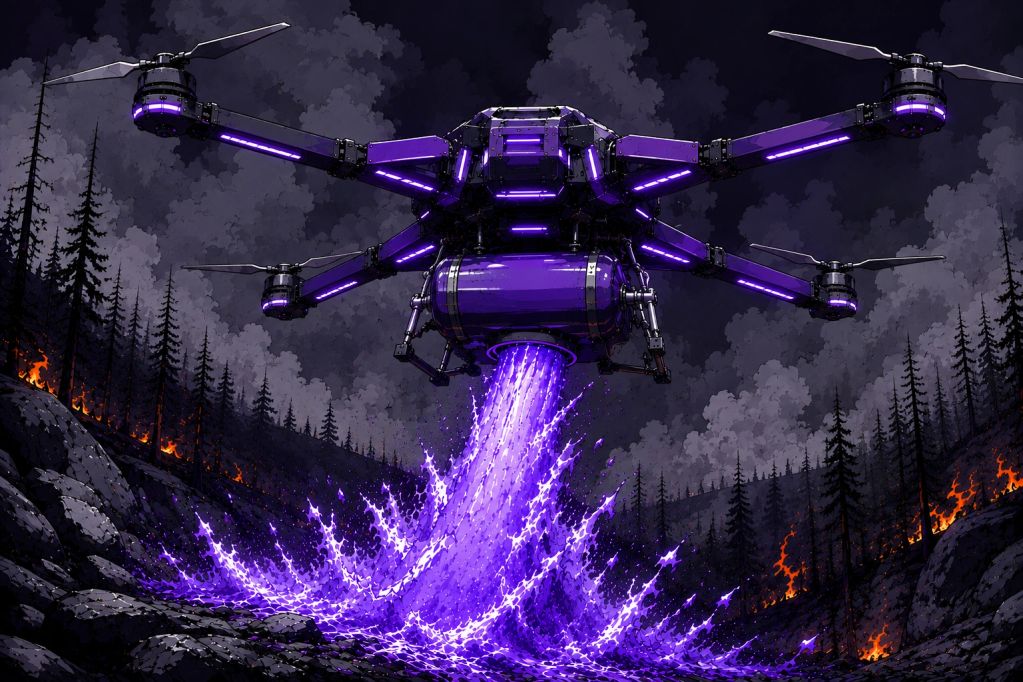
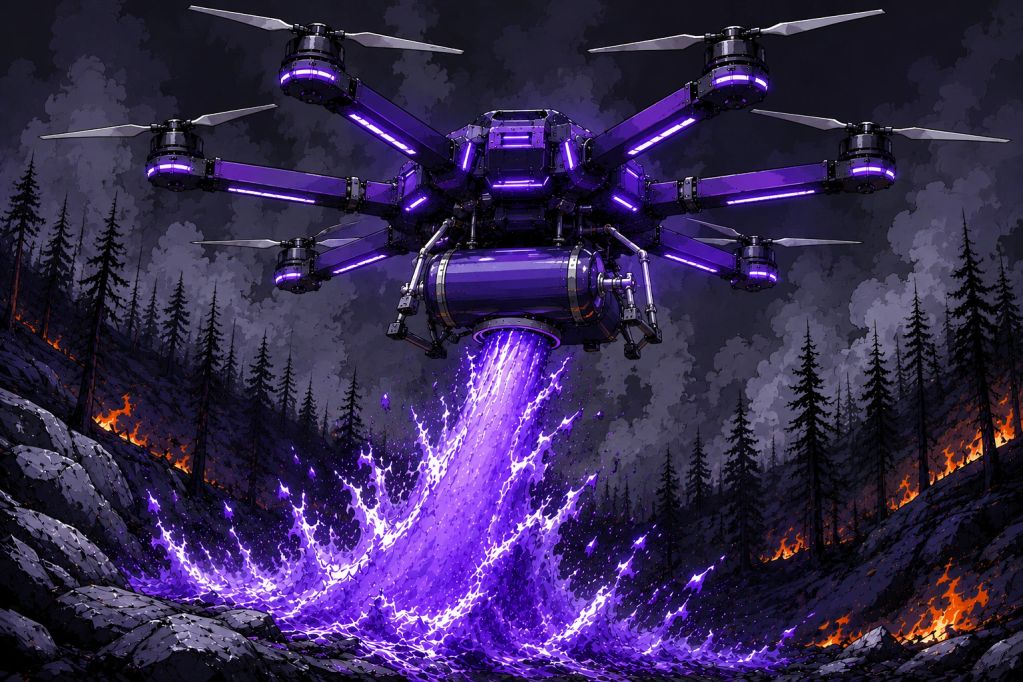
Our aircraft are cutting-edge examples of unmanned aircraft technology, specifically designed for sustained wildfire suppression operations with autonomous and hybrid-electric capabilities. The electric lift motors ensure quiet, responsive vertical flight, while an onboard generator recharges the battery system in flight, significantly extending range and time on station beyond what traditional battery power can achieve.
These advanced aeronautics engineering solutions are built to undertake missions that place human crews at the greatest risk, such as night operations, smoke-obscured terrain, and repeated drops in steep or inaccessible areas. This innovation does not replace the existing aerial firefighting fleet; rather, it serves as a force multiplier that continues to operate effectively when conditions ground everything else to a halt.
Electric motors and battery power provide the lift needed for unmanned aircraft technology, complemented by an onboard generator that enhances endurance—capabilities that pure-electric platforms cannot match. This technology is especially relevant in aeronautics engineering and applications such as wildfire suppression drones.
Engineered for precise delivery of retardants, this technology minimizes pilot exposure to smoke, challenging terrain, and night-flight hazards, showcasing advancements in unmanned aircraft technology within the field of aeronautics engineering, particularly for applications like wildfire suppression drones.
The same airframe, designed through advanced aeronautics engineering, accommodates mission-specific modules, paving the way for cargo logistics and emergency medical transport as unmanned aircraft technology continues to evolve, including the use of wildfire suppression drones.
Electric motors and battery power provide the lift needed for unmanned aircraft technology, complemented by an onboard generator that enhances endurance—capabilities that pure-electric platforms cannot match. This technology is especially relevant in aeronautics engineering and applications such as wildfire suppression drones.
Engineered for precise delivery of retardants, this technology minimizes pilot exposure to smoke, challenging terrain, and night-flight hazards, showcasing advancements in unmanned aircraft technology within the field of aeronautics engineering, particularly for applications like wildfire suppression drones.

Four-rotor baseline

Six-rotor study
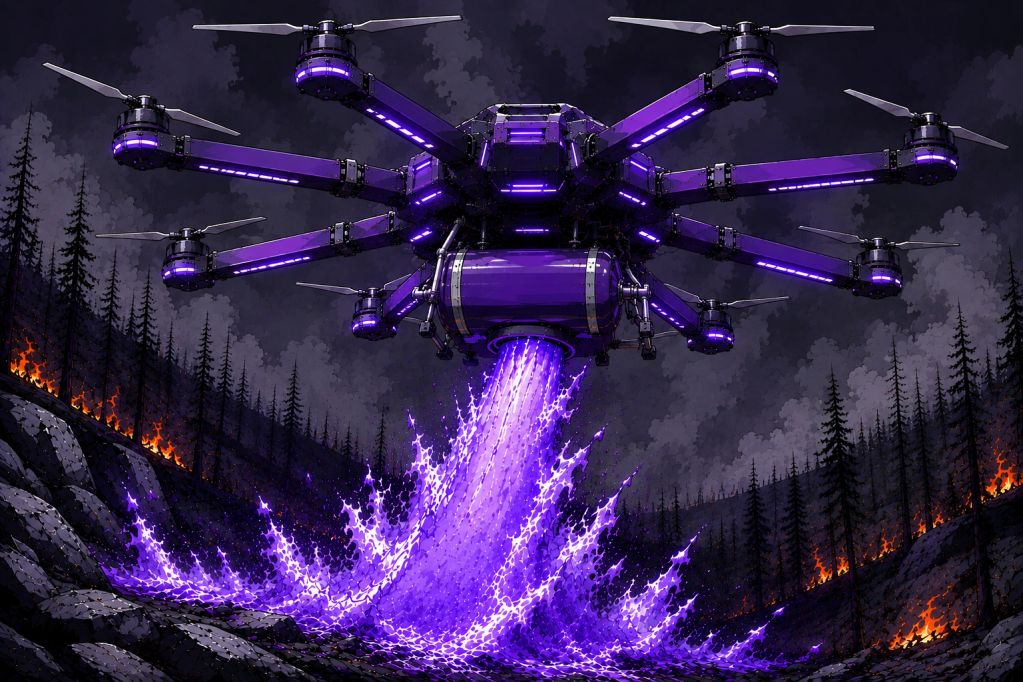
Eight-rotor study
Copyright © 2026 Underwood Aeronautics, Inc. - All Rights Reserved.
Powered by GoDaddy